
Osteoarthritis Treatment in Denver
Dr. Christopher Walker
Understanding Osteoarthritis and Joint Degeneration
Osteoarthritis develops when cartilage that cushions the joints gradually breaks down. As cartilage wears away, bones begin to rub together, causing pain, stiffness, inflammation, and reduced range of motion.
Commonly affected joints include: Knees, Hips, Shoulders, Spine, Hands
While aging is a factor, joint injuries, repetitive stress, excess weight, and inflammation can accelerate degeneration. Early intervention is critical for slowing progression and preserving joint function.
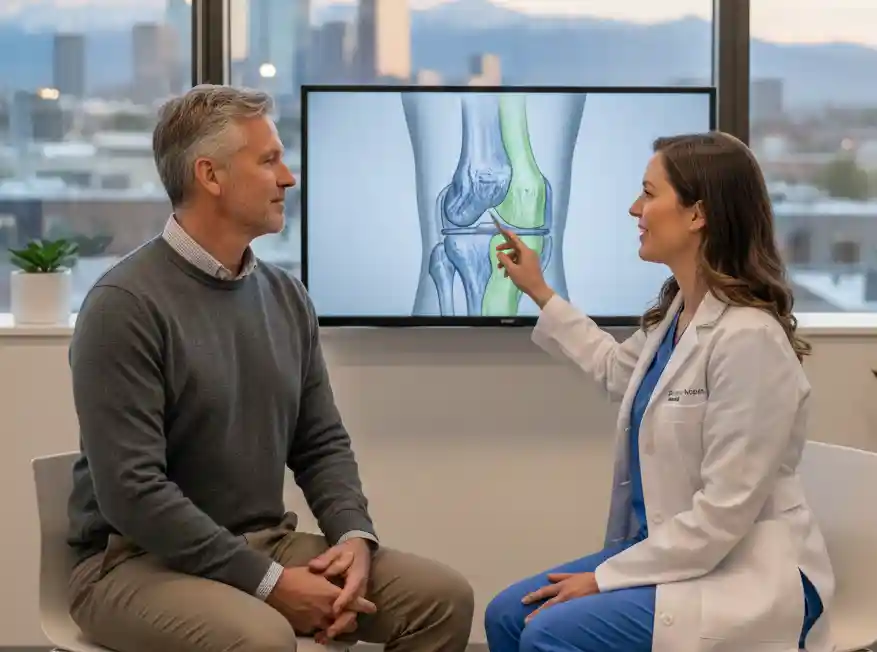
A Regenerative Medicine Approach to Osteoarthritis Treatment in Denver
Regenerative medicine focuses on supporting the body’s natural healing processes rather than masking pain. At Dr. Walker’s Denver practice, osteoarthritis treatment is designed to reduce inflammation, support cartilage health, and improve joint function without surgery.
How Regenerative Therapies Work
Regenerative treatments use biologic materials derived from the patient or carefully processed sources. These therapies aim to:
Decrease chronic inflammation
Stimulate tissue repair
Improve joint lubrication
Slow cartilage breakdown
This approach is especially beneficial for patients who want to avoid long-term medication use or invasive procedures.
Key Regenerative Treatments for Osteoarthritis
Platelet-Rich Plasma (PRP) Therapy
PRP therapy uses concentrated platelets from the patient’s own blood. These platelets release growth factors that support tissue repair and reduce joint inflammation. PRP is commonly used for knee, hip, and shoulder osteoarthritis.
Cellular-Based Regenerative Therapies
Cellular therapies focus on supporting cartilage health and joint structure. These treatments may help improve pain and mobility in moderate osteoarthritis cases when surgery is not yet necessary.
Image-Guided Precision Injections
To ensure accuracy, regenerative injections are often guided by imaging. This improves targeting of damaged joint structures and enhances treatment effectiveness.
Benefits of Regenerative Osteoarthritis Treatment
Patients seeking osteoarthritis treatment in Denver choose regenerative medicine for several reasons:
Non-surgical and minimally invasive
Uses the body’s natural healing mechanisms
Short recovery time
May delay or prevent joint replacement
Addresses the source of joint pain, not just symptoms
When combined with lifestyle guidance and movement-based rehabilitation, outcomes are often improved.
Who Is a Good Candidate for Regenerative Medicine?
Regenerative osteoarthritis treatment may be ideal for patients who:
Have mild to moderate osteoarthritis
Experience chronic joint pain or stiffness
Want to avoid surgery or opioid medications
Have not found relief with physical therapy or injections
A thorough evaluation with Dr. Walker helps determine whether regenerative medicine is appropriate for each patient.
Osteoarthritis Treatment in Denver with Dr. Christopher Walker
Dr. Walker takes a personalized approach to osteoarthritis care. Each treatment plan is based on joint imaging, symptom severity, and patient goals. His focus is to help patients regain movement, reduce pain, and return to an active lifestyle.
Located in Denver, his clinic attracts patients looking for advanced, non-surgical solutions for chronic joint conditions.
Supporting Resources and External Links
Arthritis Foundation – Osteoarthritis Overview
https://www.arthritis.org/health-wellness/about-arthritis/understanding-arthritis/osteoarthritisNational Institute of Arthritis and Musculoskeletal and Skin Diseases (NIAMS)
https://www.niams.nih.gov/health-topics/osteoarthritis
These resources support the growing role of regenerative medicine in managing osteoarthritis.