
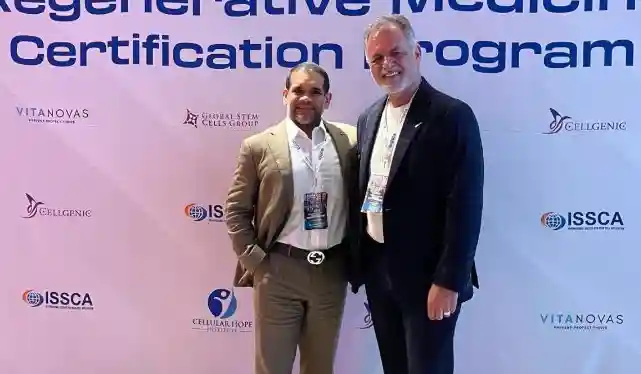
Dr. Christopher Walker at the ISSCA Regenerative Medicine Certification Program: Advancing Education and Global Collaboration
Regenerative medicine is rapidly developing as researchers and physicians continue to explore innovative approaches to tissue repair, cellular therapies, biologic medicine, and personalized healthcare. With this progress comes an important responsibility: physicians must continue expanding their knowledge and staying connected to developments within the field.
Dr. Christopher Walker regenerative medicine education reflects this commitment to continuous professional development and collaboration.
As an experienced physician, educator, and regenerative medicine specialist, Dr. Walker has developed a career that combines clinical experience with physician education. His professional profile identifies him as a faculty member of the International Society for Stem Cell Application (ISSCA) and the International Academy of Regenerative Medicine (IARM).
The photograph accompanying this article captures Dr. Walker at an ISSCA Regenerative Medicine Certification Program, highlighting the importance of professional interaction and continued advancement within this rapidly evolving medical specialty.
What Is the ISSCA Regenerative Medicine Certification Program?
The International Society for Stem Cell Application (ISSCA) is an international organization focused on advancing education, training, technology, and clinical practice in regenerative medicine.
ISSCA and its affiliated training programs provide educational opportunities for qualified healthcare professionals interested in regenerative medicine. Their educational approach includes regenerative medicine fundamentals as well as emerging clinical protocols and technologies.
Certification and professional education can play an important role in a developing medical specialty. They provide opportunities for practitioners to deepen their understanding, exchange clinical experiences, and remain engaged with developments in the field.
For physicians working in regenerative medicine, education is therefore not simply a single event. Instead, it becomes an ongoing professional process.
Dr. Christopher Walker: A Career Built on Medical Education
Dr. Christopher Walker’s professional background spans surgery, urogynecology, regenerative medicine, and physician education.
According to his professional biography, Dr. Walker trained in medicine at the University of the West Indies and completed postgraduate training in Family Medicine and Obstetrics and Gynecology in the United States. His career subsequently expanded into advanced surgical procedures, robotic surgery, cosmetic medicine, and regenerative medicine.
His experience has also led him into international medical education.
Today, Dr. Walker describes his work as extending beyond patient care to include the education and training of physicians interested in advanced regenerative medicine approaches. His areas of professional interest include stem cell therapy, exosome therapy, peptide medicine, and hormone optimization.
This combination of clinical experience and education provides an important perspective as regenerative medicine continues to develop.
Why Continuous Regenerative Medicine Training Matters
Medicine changes continuously.
New research emerges, clinical protocols evolve, technologies improve, and physicians must evaluate new information carefully before incorporating it into clinical practice.
For this reason, regenerative medicine training should extend beyond learning the basic concepts of cellular and biologic therapies.
Effective professional education can help physicians understand:
- Current regenerative medicine concepts
- Patient selection considerations
- Cellular and biologic therapies
- Emerging treatment technologies
- Clinical protocols and standards
- Safety and responsible implementation
- Research developments
- Ethical considerations
- Patient education and informed decision-making
ISSCA describes its educational mission as providing physicians and qualified medical professionals with training that ranges from regenerative medicine fundamentals to more advanced, peer-reviewed protocols.
From Clinical Experience to Global Medical Education
One of the defining characteristics of modern regenerative medicine is its international nature.
Physicians, researchers, educators, and medical organizations increasingly collaborate across geographic boundaries. Conferences, certification programs, workshops, and physician training events create opportunities for professionals to exchange knowledge and discuss developments within the specialty.
Dr. Christopher Walker’s professional biography reflects this international focus. His medical career has included training and professional experience across multiple countries, while his current work includes educating healthcare professionals internationally.
This global perspective is particularly valuable in a field where clinical research and technology continue to evolve.
The Importance of Physician Collaboration
Regenerative medicine cannot advance through individual practitioners working in isolation.
Collaboration allows physicians to compare experiences, discuss emerging research, examine clinical approaches, and learn from specialists working in different areas of medicine.
Events such as the ISSCA Regenerative Medicine Certification Program provide an environment where healthcare professionals can interact with colleagues who share an interest in advancing regenerative medicine.
Global Stem Cells Group has described its ISSCA training initiatives as providing intensive, hands-on education for qualified physicians and high-level medical professionals worldwide.
For educators such as Dr. Christopher Walker, these professional environments create opportunities not only to share knowledge but also to learn from other practitioners.
Regenerative Medicine Education Beyond Stem Cell Therapy
Although stem cell therapy remains an important area of regenerative medicine, the field encompasses a much broader range of scientific and therapeutic concepts.
Modern regenerative medicine discussions can include areas such as:
Stem Cell Applications
Stem cell science continues to generate significant research interest because of the potential applications of cells in tissue repair and regenerative processes.
Exosome and Extracellular Vesicle Research
Exosomes and other extracellular vesicles are being investigated for their role in intercellular communication and their potential applications in regenerative medicine research.
Peptide Medicine
Peptides have attracted growing interest in longevity, metabolic health, tissue signaling, and other areas of emerging medical research. Dr. Walker’s professional education work also includes peptide medicine.
Personalized Medicine
Regenerative medicine increasingly intersects with personalized healthcare, where treatment decisions are considered in the context of an individual’s clinical history, goals, and biological characteristics.
These areas require careful education and responsible interpretation of scientific evidence.
Building the Next Generation of Regenerative Medicine Physicians
The future of regenerative medicine depends not only on scientific discoveries but also on the physicians who understand how to evaluate and responsibly apply new knowledge.
This is where regenerative medicine physician training becomes especially important.
Experienced educators can help practitioners understand both the opportunities and limitations associated with emerging therapies. Furthermore, structured education encourages physicians to approach new technologies with scientific curiosity while maintaining appropriate clinical standards.
Dr. Christopher Walker’s involvement in international physician education reflects this broader objective: helping healthcare professionals continue developing their knowledge as regenerative medicine progresses.
A Continuing Commitment to Medical Innovation
The photograph from the ISSCA Regenerative Medicine Certification Program represents more than attendance at a professional event.
It represents the value of education, collaboration, and continuous professional development.
For Dr. Christopher Walker, regenerative medicine education is closely connected to his broader professional mission. His work as a physician and educator places him at the intersection of clinical medicine, emerging regenerative technologies, and physician training.
As the field continues to evolve, ongoing education will remain essential.
The next generation of regenerative medicine will be shaped by physicians who are willing to learn, collaborate, critically evaluate new evidence, and contribute to responsible innovation.